





Pure Sine Wave vs Modified Sine Wave Car Inverters
- How Car Power Inverters Work
- Basic principle: DC to AC conversion
- Key specifications you must check
- Why waveform matters in practical use
- Technical Comparison: Pure Sine Wave vs Modified Sine Wave
- Waveform shape and electrical characteristics
- THD, efficiency and measurable performance
- Cost, size and efficiency trade-offs
- Choosing the Right Inverter for Your Vehicle and Devices
- Match inverter capacity to actual loads
- Device-specific guidelines
- Installation considerations in vehicles
- Reliability, Safety and Certification — Why Manufacturer Matters
- Testing, automated production and compliance
- Long-term support and OEM/ODM capability
- Case: Guangzhou Congsin Electronic Technology Co., Ltd.
- Practical Recommendations and Buying Checklist
- When to choose pure sine wave inverters
- When modified sine may be acceptable
- Buying checklist
- Frequently Asked Questions (FAQ)
- 1. Can I run my laptop and phone charger on a modified sine inverter?
- 2. Will a modified sine inverter damage my CPAP machine?
- 3. How do I size an inverter for a refrigerator or power tool?
- 4. What certifications should I look for in a car inverter?
- 5. How much battery capacity do I need to run an inverter in a vehicle?
- 6. Are there environmental or installation limitations for car inverters?
When choosing a power inverter for your car, RV or truck, understanding waveform, efficiency, device compatibility and safety is essential for reliable on-the-road power. This article compares pure sine wave and modified sine wave car inverters in technical detail, gives practical selection guidance (watt sizing, surge handling, THD, certifications), and explains why manufacturer quality and testing standards matter. It also highlights Guangzhou Congsin Electronic Technology Co., Ltd.'s capabilities and model ranges for vehicle power solutions to help fleet managers, RV owners and installers make a trustworthy decision.
How Car Power Inverters Work
Basic principle: DC to AC conversion
A car power inverter converts 12V/24V DC from a vehicle battery or auxiliary system into 110–120V or 220–240V AC suitable for household-style equipment. The fundamental stages are DC–DC (voltage boosting if needed), H-bridge switching to synthesize an AC waveform, and filtering/regulation to stabilize output voltage and frequency. For a general overview of inverter technology see Inverter (electrical) — Wikipedia.
Key specifications you must check
For any power inverter car purchase look at continuous power (W), peak/surge power (W), output waveform type (pure or modified sine), total harmonic distortion (THD), efficiency (%), no-load current draw, cooling method, and safety certifications (CE, EMC, LVD, ETL, FCC, RoHS, E-MARK). These metrics determine whether the inverter can reliably run your devices without damage, excessive heat or battery drain.
Why waveform matters in practical use
Waveform affects device compatibility, electromagnetic interference and device longevity. Many modern electronics rely on clean sinusoidal AC for proper operation. Motors, audio equipment, medical devices (e.g., CPAP), and variable-speed drives are particularly sensitive to waveform quality and may not run (or may run poorly) on modified sine outputs.
Technical Comparison: Pure Sine Wave vs Modified Sine Wave
Waveform shape and electrical characteristics
Pure sine wave inverters synthesize a continuous sinusoidal voltage similar to utility power. Modified sine wave (often a stepped or quasi-square wave) approximates a sine by switching between voltage levels. The difference in waveform shape leads to distinct harmonic content and THD values, which influence device heating, audible noise and interference with power supplies.
THD, efficiency and measurable performance
Total Harmonic Distortion (THD) quantifies waveform purity. Pure sine inverters typically produce THD under 3%–5% for quality models; modified sine inverters often exhibit THD well above 20% depending on waveform approximation and load. Lower THD correlates with less audio buzzing, reduced heating in motors and transformers, and greater compatibility with sensitive electronics. Reference: Total harmonic distortion — Wikipedia.
Cost, size and efficiency trade-offs
Modified sine inverters are usually simpler and cheaper because they require less complex switching and filtering. Pure sine inverters use higher-spec power electronics, more sophisticated control (PWM or multi-level conversion) and extra filtering, increasing cost and sometimes size. In terms of conversion efficiency, many modern pure sine inverters reach 88%–95% peak efficiency, comparable to or slightly better than cheap modified sine units under optimal load conditions. Energy and thermal performance should be checked on manufacturer datasheets for the specific model.
| Feature | Pure Sine Wave | Modified Sine Wave |
|---|---|---|
| Waveform | Continuous sinusoid (utility-like) | Stepped/quasi-square approximation |
| Typical THD | <3%–5% (quality units) | >15%–30% (varies widely) |
| Device compatibility | All devices including sensitive electronics, medical devices, induction motors | Most resistive loads; many switch-mode power supplies; not recommended for sensitive or motor loads |
| Typical efficiency | 88%–95% (model dependent) | 80%–90% (model dependent) |
| Cost | Higher | Lower |
| Best uses | CPAP, laptops, medical equipment, audio systems, refrigerators, pumps | Simple tools, incandescent bulbs, basic chargers, small appliances |
Choosing the Right Inverter for Your Vehicle and Devices
Match inverter capacity to actual loads
List all devices you plan to run, include starting (surge) and continuous power. Motors and compressors can draw 3–7× their running current at startup. For example, a 500W refrigerator may require a 1500–3000W inverter to accommodate starting surge. Always choose an inverter with a surge rating comfortably above your highest single-starting-load current and allow headroom for simultaneous loads.
Device-specific guidelines
- CPAP machines: use pure sine wave inverters; many CPAP manufacturers advise against modified sine waves.
- Laptops, phone chargers: most modern switch-mode power supplies tolerate modified sine, but pure sine reduces heating and interference.
- Power tools and motors: pure sine preferred for efficient starting and lower motor heating; modified sine may cause extra noise and reduced torque.
- Audio/AV equipment: pure sine reduces hum and interference.
Installation considerations in vehicles
For a car or RV installation, consider battery capacity, alternator capability, wiring gauge, fuse protection and ventilation. Inverters draw current directly from the DC source; a 1000W inverter at 12V under 90% efficiency can draw ~100A under heavy load. Use appropriately sized cables and include a remote shut-off or master switch for safety. For vehicle electrical integration best practices see industry installation guides and manufacturer manuals.
Reliability, Safety and Certification — Why Manufacturer Matters
Testing, automated production and compliance
Reliable operation in mobile environments requires robust design, thermal management, and quality manufacturing. Choose suppliers who use automated production lines, multifunctional testing equipment and provide independent certifications (ISO9001 quality systems and product approvals like CE, EMC, LVD, ETL, FCC, RoHS, E-MARK). These ensure consistent build quality, electromagnetic compatibility and adherence to safety standards.
Long-term support and OEM/ODM capability
For fleet buyers, OEM dealers or system integrators, manufacturers offering OEM/ODM, private labeling and customization reduce integration risk and speed deployment. Look for companies with patents, multi-model catalogs and documented field-service policies to back products over years of field use.
Case: Guangzhou Congsin Electronic Technology Co., Ltd.
Guangzhou Congsin Electronic Technology Co., Ltd., founded in early 1998, is a professional power inverter manufacturer with over 27 years of focused experience. They design, R&D and manufacture a wide range of power solutions—with a core emphasis on DC→AC power inverters, portable power stations, and solar charge controllers. Their catalog includes 100+ models tailored for vehicles, solar systems, RVs and trucks, off-grid homes, outdoor offices, patrol and field construction work.
Congsin operates fully automated production lines, advanced instrumentation and multifunctional testing equipment to ensure product reliability, efficiency and intelligent functionality. Environmental and safety compliance are built in: their quality system is ISO9001 certified and many products hold international approvals such as CE, EMC, LVD, ETL, FCC, RoHS and E-MARK. Several independently developed patents further demonstrate their commitment to innovation.
Congsin’s offerings relevant to vehicle electrification include modified sine wave inverter options for cost-sensitive resistive loads, pure sine wave inverter models for sensitive electronics and motors, solar charge controllers and portable power stations—covering both OEM and aftermarket channels. Their products serve global markets across Europe, the Americas, the Middle East, Africa and Southeast Asia, supported by OEM/ODM, private labeling, and bespoke customization.
Practical Recommendations and Buying Checklist
When to choose pure sine wave inverters
- Running medical devices (CPAP, oxygen concentrators), modern audio/video systems, sensitive lab equipment or variable-speed motors.
- Systems where efficiency, low heat and low electrical noise are priorities.
- Long-term investment where device longevity and warranty compliance matter.
When modified sine may be acceptable
- Short-term use for resistive loads (incandescent and many LED lights), simple battery chargers and basic power tools with universal motors.
- When budget and weight are major constraints and devices used are tolerant of waveform distortion.
Buying checklist
- Inventory loads: list continuous and surge watts for each device.
- Choose waveform: prefer pure sine for sensitive loads.
- Check certified specs: efficiency curve, THD, surge rating, idle draw, cooling rating and operating temperature range.
- Verify manufacturer credentials: ISO9001, product approvals (CE/ETL/FCC/etc.), test reports and warranty terms.
- Plan electrical integration: cable size, fuse, remote switch and ventilation for in-vehicle installation.
Frequently Asked Questions (FAQ)
1. Can I run my laptop and phone charger on a modified sine inverter?
Often yes—many modern switch-mode chargers tolerate modified sine wave. However, some laptop power bricks may run hotter, generate audible noise, or exhibit reduced efficiency. For reliability and to avoid potential issues, a pure sine inverter is recommended if you frequently run sensitive electronics.
2. Will a modified sine inverter damage my CPAP machine?
Many CPAP manufacturers specify a pure sine wave supply for safe operation. Modified sine can cause the CPAP’s internal power supply to overheat or malfunction. Always consult your device manual; when in doubt, use a pure sine inverter.
3. How do I size an inverter for a refrigerator or power tool?
Identify the refrigerator’s running wattage and peak start-up wattage (often 2–7× running). Choose an inverter with a surge rating above that peak and a continuous rating above running load, with margin for simultaneous devices. For example, a fridge with 300W running and 1200W start-up suggests a 1500–2000W inverter to be safe.
4. What certifications should I look for in a car inverter?
Look for ISO9001 for quality systems and product-level approvals like CE (safety), EMC (electromagnetic compatibility), LVD (low-voltage directive), ETL or UL (North American safety), FCC (EMI), RoHS (restricted substances) and E-MARK (vehicle approval in some regions). These indicate compliance with safety and emission norms.
5. How much battery capacity do I need to run an inverter in a vehicle?
Calculate energy demand (Wh) = device watts × hours. Account for inverter efficiency (divide required AC Wh by inverter efficiency). Use battery usable capacity: e.g., for a 12V 100Ah battery (1200Wh nominal), usable capacity may be ~600Wh for lead-acid to avoid deep discharge; lithium chemistry offers higher usable depth. Also consider alternator charging capability for prolonged use while driving.
6. Are there environmental or installation limitations for car inverters?
Yes. Vehicle ambient temperatures, vibration and enclosure ventilation impact inverter performance. Install in a ventilated, low-dust area, secure against vibration, and follow manufacturer altitude and temperature ratings to avoid derating or thermal shutdown.
If you need tailored recommendations for vehicle-specific installations, load lists, or OEM/ODM inverter solutions, contact Guangzhou Congsin Electronic Technology Co., Ltd. Their decades of experience in pure sine wave inverter, modified sine wave inverter, solar charge controller and portable power station design can help you select or customize the right model for cars, RVs, trucks and off-grid applications.
Explore Congsin’s product range or request a quote: contact Guangzhou Congsin Electronic Technology Co., Ltd. for specifications, certifications and OEM/ODM options. When evaluating suppliers, ask for datasheets showing THD, efficiency curves, surge ratings and test reports to verify real-world performance.
Top 10 Car Battery Inverters for Road Trips and Camping
Top Pure Sine Wave Inverter Models for Commercial Use 2026
Battery compatibility and charging modes for off-grid inverters
Best 24V Off-Grid Inverters for Solar Homes and Cabins
Pure Sine Wave Inverters
What appliances can this inverter support?
Rated 1500W, peak 3000W – supports most home appliances.
Is the remote control standard?
It’s optional and available upon request.
Modified Sine Wave Inverters
Which plug types are supported by the universal socket?
The universal socket is compatible with most national plug specifications, such as GB, US, EU, etc., and can meet the use of devices in different regions (some require adapters).
What is the function of the independent control switch?
The independent control switches for DC and AC can respectively control the on and off of DC and AC circuits, facilitating the separate management of power supply for different types of devices and improving power usage safety and flexibility.
What devices can this inverter support?
It can power laptops, phones, cameras, and other small appliances.
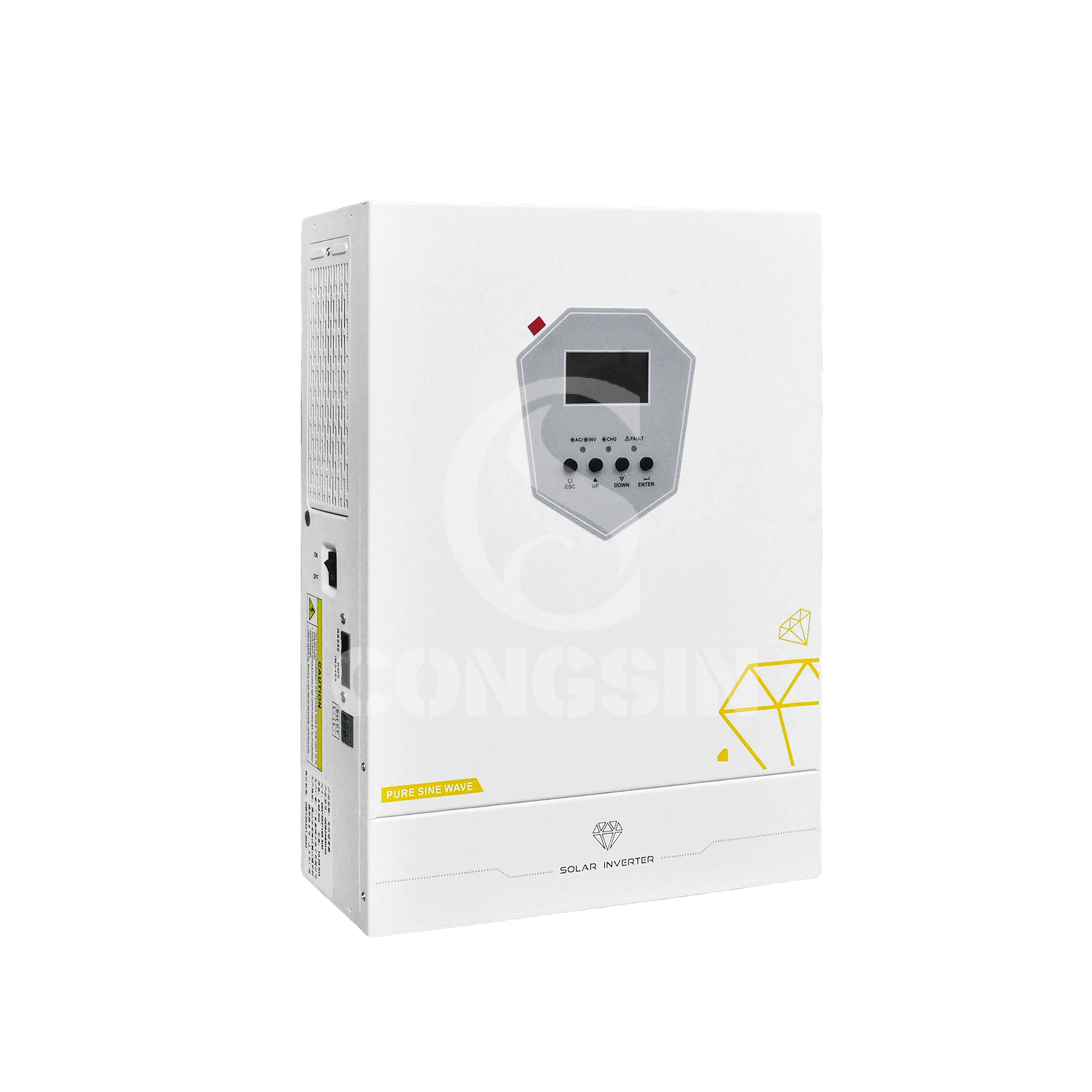
Factory Direct Sales 6000W Hybrid Solar Power Inverter with Controller and LCD Display
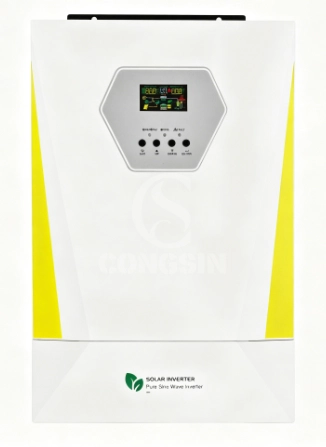
Congsin 4000W and 6000W Hybrid Inverter with Controller with LCD Display and CE Certification Solar
Power your solar system efficiently with the Congsin 4000W and 6000W Hybrid Inverter. Featuring an integrated MPPT Controller, this CE Certified inverter ensures optimal energy conversion. Monitor performance effortlessly via the intuitive LCD Display. Reliable, powerful, and ready for your sustainable energy needs.
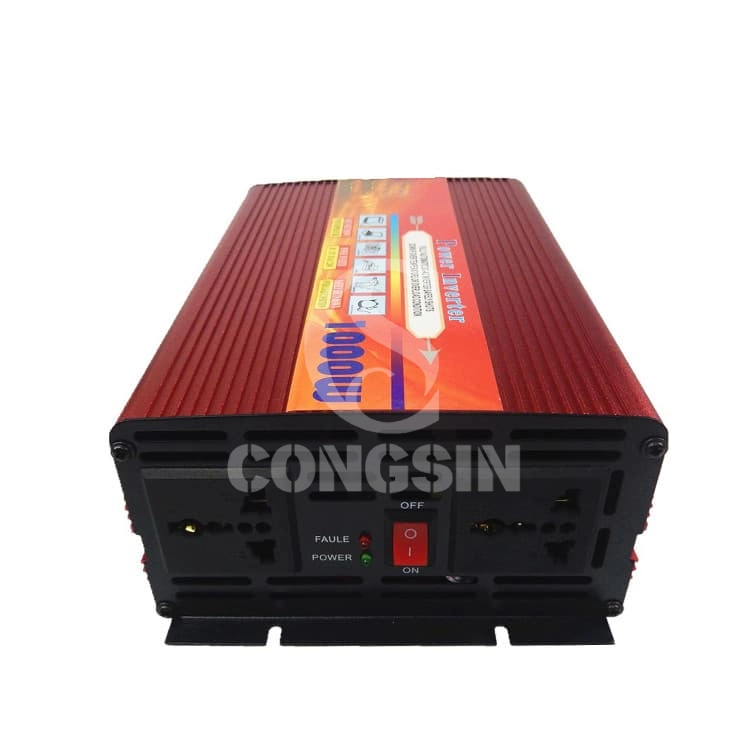
Congsin Manufacturer Wholesales Big Capability Modified Sine Wave Inverter with Red case and Double fan
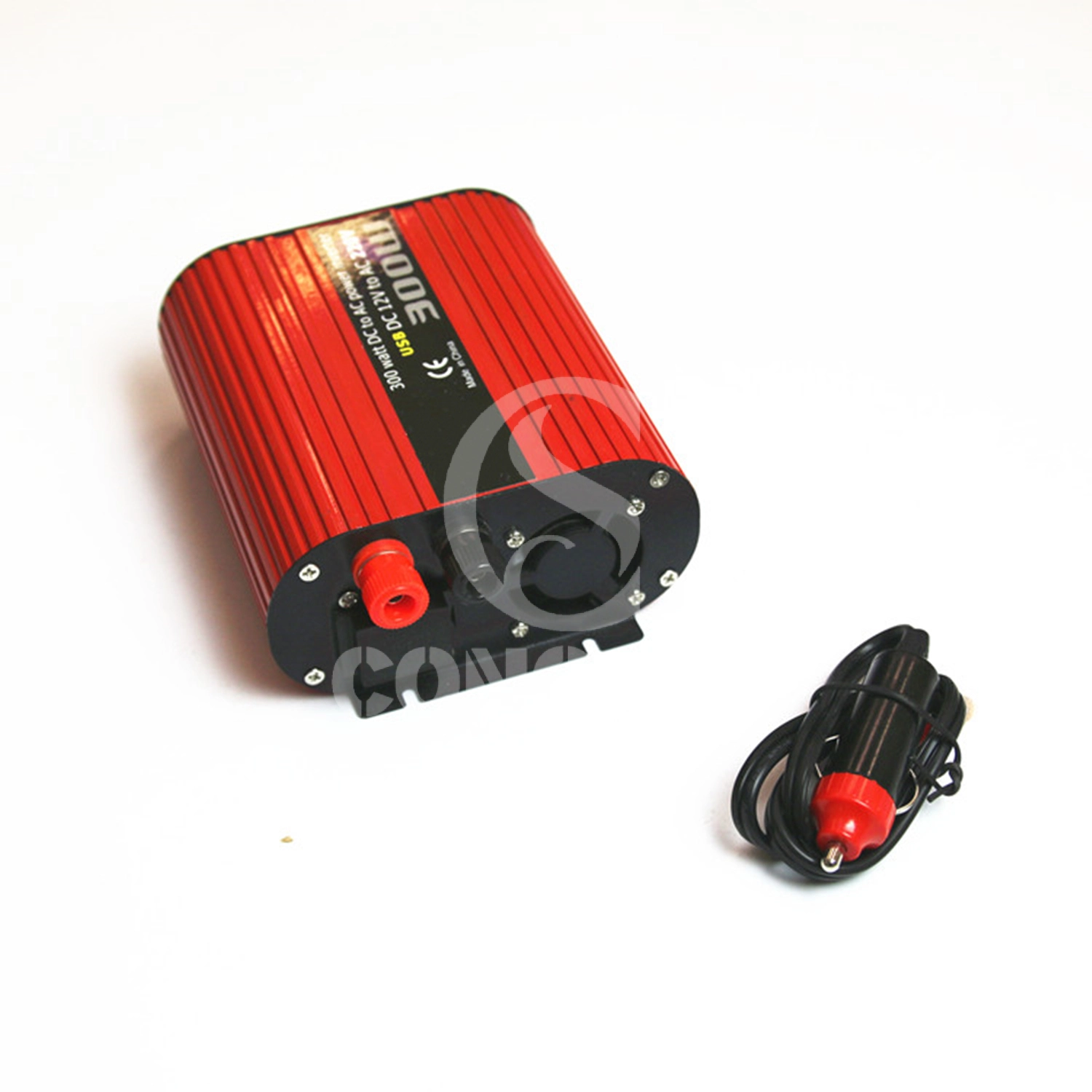
Factory Direct Sales Portable 150W Modified Sine Wave Inverter DC12V to AC220V Off-grid Sine Wave Inverter with Two USB and Universal Socket
Congsin's Portable 150W Modified Sine Wave Inverter powers your journey! This versatile Car Power Inverter with USB acts as a reliable 12V to 220V converter, ensuring an essential off-grid power supply. With dual USB ports and a universal socket, enjoy convenient power on the go.

CONGSIN is a trusted OEM factory for power inverters, solar charge controllers, and DC converters. Reliable solutions for global B2B buyers.
 High Quality
 7/24 Service
 Guaranteed Warranty
© 2025 Congsin. All Rights Reserved.
 WeChat
 Scan QR Code
sin cong
teaimei10
Whatsapp: +8618028086791
Scan QR Code